Blog
How to raise the profile of reading in your school – Part Two

How to raise the profile of reading in your school: Part Two
In part one of our strategy, we looked at several low-cost ways to raise the status of reading in schools. In part two, we explore more ideas to get children excited about books and enhance physical reading spaces and resources.
Organise special reading events in school
Reading challenges and competitions are a great way to create a buzz around reading. Recognising reading achievements and making reading visible within the school can also help reluctant readers to get involved and engage in reading.
The National Literacy Trust run challenges every term to encourage reading for pleasure, develop reading stamina and promote diversity in literature.
These initiatives are open to all UK schools and are completely free, for more information visit: https://literacytrust.org.uk/competitions/


Celebrate reading at every opportunity
Celebrating special events like World Book Day, National Poetry Day and National Storytelling Week allows you to promote reading in a fun and positive way.
Did you know we have a FREE literacy resource hub for schools? The hub features lots of different literacy activities and themed booklists to help teachers promote reading, discover new reads and share their passion for books with their class. The hub also includes resources especially for events like World Book Day and National Storytelling Week.
Access our FREE resource hubConnect children with authors
Hosting author visits can greatly enhance students’ engagement, promote wider reading and boost overall enthusiasm for books.
Meeting an author in person can also make books come alive for children and provide inspiration to explore new genres and topics.
Authors often include workshops or storytelling sessions which encourage children to think creatively and explore their imaginations.

Engage families with reading
Engaging parents and families in reading initiatives is a powerful way for schools to raise the status of reading in the whole community. Here are a few ideas to get you started:
- Open the school library to parents before or after school to create a community space that embraces reading for pleasure.
- Include families in reading challenges and competitions.
- Organise a community book swap in the school where families can bring in books they no longer need and exchange them for new ones.
- Share tips for parents on how to engage children in reading – asking questions, discussing characters and making predictions.
- Provide low-cost strategies to create mini-home libraries.
- Host book fairs where parents and carers can purchase books together.
- Encourage families to volunteer as reading buddies.
For more ideas, take a look at our guest blog where teacher and parent, Esther Brown shares her top tips to support reading at home.
Check out Esther's blog
Create enriching reading environments around school
School libraries, classroom book areas and communal displays play an important part in developing a school-wide reading culture. A good school library, for example, is key in generating excitement around books and facilitating a lifelong love of reading.
At BookSpace, we visit hundreds of primary schools each year that want to reinvigorate their library space. We often hear teachers say ‘it’s become a bit of a dumping ground’, ‘it’s a little unloved’ or ‘it’s just become a place to swap books’.
However, a well-designed school library with child-friendly shelving, eye-catching displays and comfortable seating can make all the difference.
We believe the school library should be an inviting space where there are plenty of opportunities for pupils to browse, talk about books, share their reading experiences and make recommendations to peers.
If your school doesn’t have a dedicated library space, then creating comfortable reading areas in classrooms with a small selection of high-quality books that can be rotated or refreshed regularly is vital. Pay special attention to displaying books face-out as this is proven to make choosing easier for young readers.
Need some inspiration? Check out our Reading Corner gallery to see how we’ve transformed classroom corners into inviting and cosy reading spaces for children.
Case study highlight
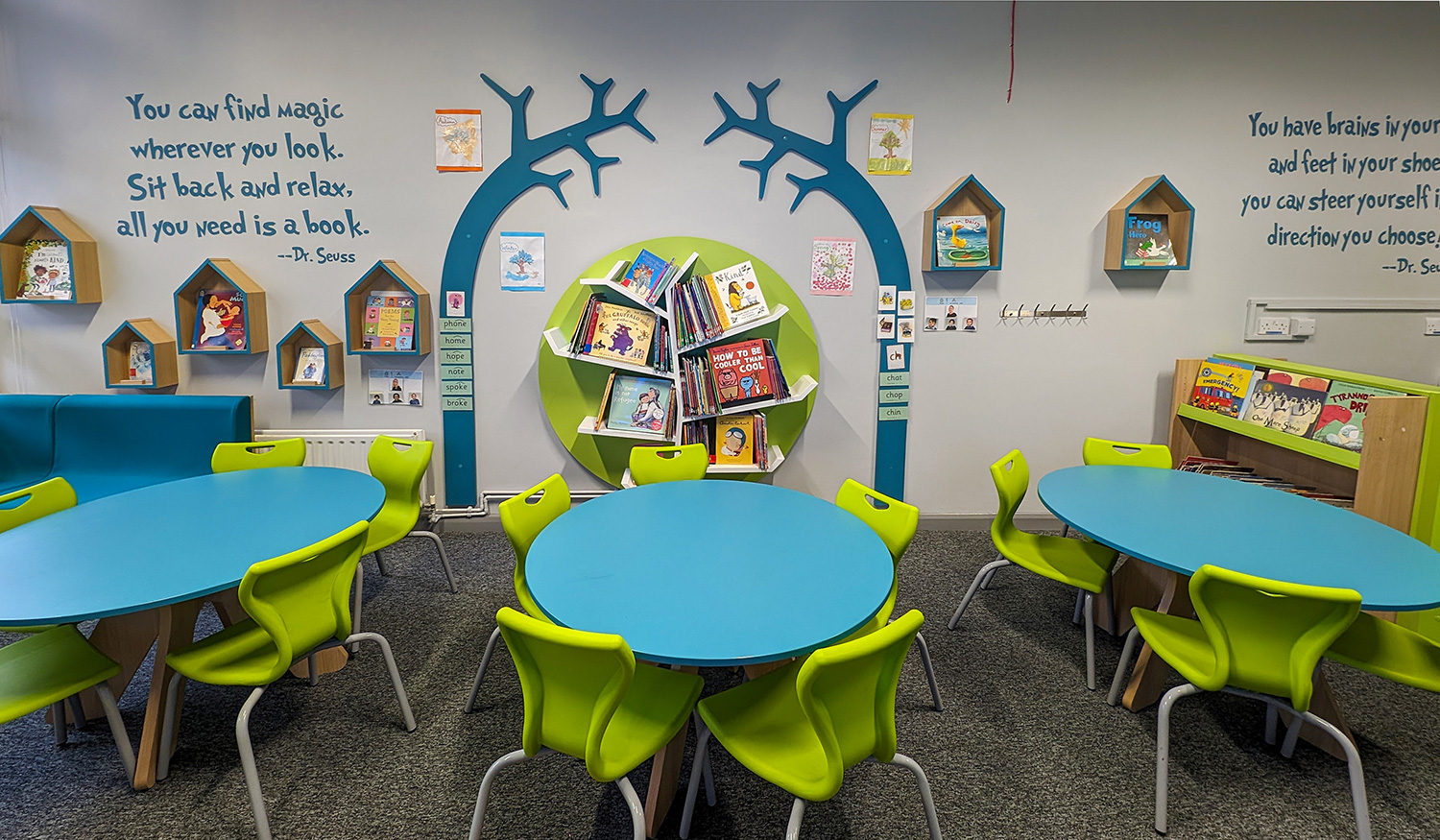
Deputy Headteacher, Hugh Heneghan at St Joan of Arc R.C. Primary School implemented a three-phase development plan to raise the profile of reading and showcase its importance. Read the full case study here.

Phase 1
Improving classroom libraries and reading corners to provide every child with access to books.
Phase 2
Creating a child-friendly nurture space with a teaching wall, book corner and areas for group work.

Phase 3
Designing a multi-purpose school library for teaching, intervention and independent reading.
“The redesigned areas have been a fantastic addition to the school. The areas not only look engaging and attractive to the children, but they are also robust and well-suited to the hustle and bustle of primary school day-to-day activity. All of the areas are now used every day and have provided spaces that meet the increasingly wide-ranging requirements we have. We are delighted with them.”
Hugh Heneghan, St Joan of Arc R.C. Primary School
Review your book collection
If we want to inspire young readers, then we need to find out what they like to read and encourage them to make their own choices.
To cater to a wide range of interests and backgrounds, schools should curate a diverse and inclusive collection of reading materials. This includes books featuring characters from various ethnicities, backgrounds, and abilities. Such representation not only fosters inclusivity but also helps students relate to the stories they read.
If you want to review your book collection but don’t know where to start, you can download this simple auditing guide and checklist for free.
FREE book auditing guideAssess and adapt
Finally, reviewing these strategies regularly can ensure your overall plan is a success:
- Conduct regular surveys to gather students’ input on their reading habits, favourite books, and what kinds of reading activities they find most enjoyable. This feedback can help tailor programs to children’s preferences.
- If you have a library management system, monitor library borrowing data to identify popular genres or underutilised resources, and adjust the library’s offerings accordingly.
- Provide ongoing professional development for teachers on how to promote reading in the classroom and how to support students with varying reading abilities.
Summary
Raising the profile of reading in schools requires a multi-faceted and sustained effort that involves every member of the school community. Through these strategic actions, schools can create a vibrant reading culture that develops enthusiastic, lifelong readers of the future.
If this has inspired you to improve your school library or reading corners, call our friendly design team on 0121 246 2777 to see how we can help. Alternatively, click here to find out about our free library design service for schools.
Back to blog page.
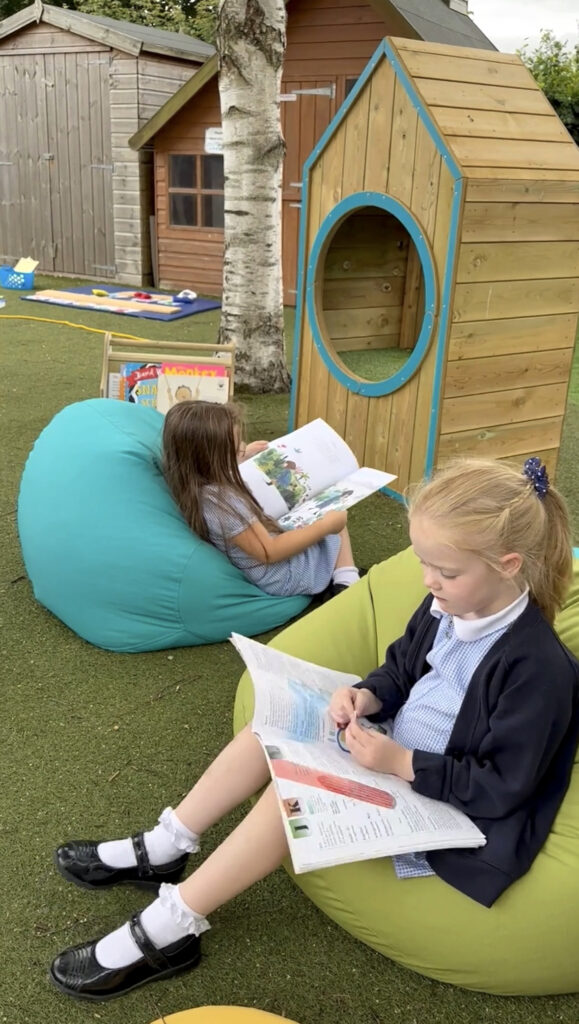
Outdoor library furniture
Did you know we also supply outdoor reading furniture for schools? This is a great way to extend reading beyond the classroom and go outdoors.
Our outdoor range has everything you need to create the perfect outdoor library – child-friendly shelving, handy book storage, comfy seating and durability.
Shop now